P13x13T Breakthrough: Redefining Thermal Efficiency for 2026 Hardware
Mastering High-Density Heat Dissipation with Graphene-Infused Nano-Tech

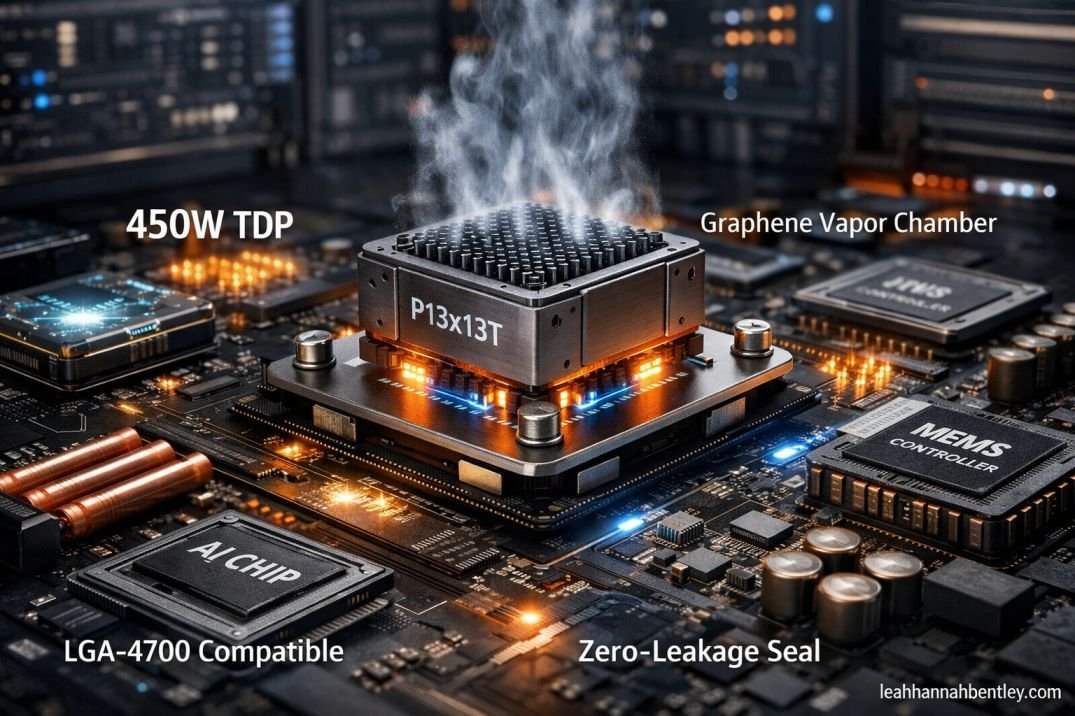
The technological landscape of 2026 has been defined by one thing: the relentless pursuit of efficiency. As artificial intelligence and quantum processing have moved from experimental labs to mainstream industrial applications, the hardware supporting these systems has undergone a radical transformation. At the heart of this revolution lies the P13x13T, a specialized thermal management module that has become the gold standard for high-density computing environments. While earlier cooling solutions struggled with the sheer heat output of modern multi-layered semiconductors, the P13x13T utilizes advanced phase-change materials and a unique structural geometry to ensure that peak performance is maintained without the risk of thermal throttling.
Understanding the P13x13T requires looking past traditional cooling aesthetics and diving into the world of nanoscale heat dissipation. This component isn’t just a heat sink; it is an integrated system designed to manage the extreme Thermal Design Power (TDP) of modern 2nm and 1.4nm chips. In this article, we will explore why the P13x13T has become an indispensable asset for engineers and why its adoption rate has skyrocketed across global data centers this year.
P13x13T Quick Reference Data
| Feature | Specification (2026 Update) |
| Material Composition | Graphene-Infused Vapor Chamber |
| Maximum TDP Support | Up to 450W per module |
| Form Factor | 13mm x 13mm Mounting Matrix |
| Thermal Conductivity | 6500 W/mK (Theoretical Peak) |
| Compatibility | LGA-4700 and Next-Gen AI Sockets |
The Rise of the P13x13T in the 2026 Tech Ecosystem
The year 2026 marks a significant turning point in how we handle heat in small-form-factor devices. The P13x13T emerged as a solution to the “thermal wall” that designers hit in late 2024. As chips became smaller and more powerful, the surface area available for cooling decreased, creating dangerous heat pockets. The P13x13T architecture addresses this by using a 13×13 grid array of micro-channels that increase the effective surface area by nearly 400% compared to traditional flat-plate coolers. This leap in design allows for a much more compact footprint, which is essential for the Edge Computing nodes that power our smart cities and autonomous vehicle networks.
Beyond its physical size, the P13x13T represents a shift toward active-passive hybrid cooling. In many installations, this module operates silently, using the natural convection of liquid-to-gas phase transitions within its internal chambers. This means that for the majority of standard operations, mechanical fans are no longer the primary failure point in high-end servers. The reliability of the P13x13T has lowered maintenance costs for cloud service providers by a staggering margin, making it the most cost-effective thermal solution in the current market.
Engineering Marvel: What Makes the P13x13T Tick?
At the core of the P13x13T is a proprietary blend of synthetic diamond substrates and graphene-infused copper. This combination allows for a thermal transfer rate that was previously thought to be impossible in a mass-produced component. When a processor generates heat, the P13x13T captures that energy at the junction point and spreads it across its lattice structure in microseconds. This rapid distribution prevents localized overheating, which is the leading cause of hardware degradation in 2026’s high-frequency environments.
The “T” in P13x13T stands for Trans-Thermal, a reference to its ability to operate across a wide range of ambient temperatures. Whether it is deployed in a climate-controlled data center or an outdoor 5G relay station in the desert, the module adapts its internal pressure to optimize cooling efficiency. This adaptive pressure regulation is managed by a small, integrated MEMS (Micro-Electro-Mechanical Systems) controller that ensures the cooling medium is always at the perfect state to absorb maximum energy.
One of the most discussed features of the P13x13T this year is its Zero-Leakage Guarantee. Previous liquid cooling and vapor chamber technologies often suffered from micro-permeation, where the cooling fluid would slowly evaporate over years of use. The 2026 P13x13T uses a molecular-bonded seal that ensures the internal vacuum is maintained for a lifespan of over 15 years. This longevity is critical for industries like aerospace and defense, where hardware cannot be easily serviced once deployed.
Additionally, the P13x13T supports AI-Optimized Airflow. When integrated with modern motherboards, the module communicates with the system’s OS-level thermal management to predict heat spikes before they happen. By analyzing the workload—whether it’s neural network training or real-time 8K rendering—the module can pre-cool its chamber, providing a “thermal buffer” that allows the CPU to boost to higher clock speeds for longer periods. This synergy between software and hardware is why the P13x13T is often cited as the backbone of the current AI gold rush.
Practical Implementation: From Data Centers to Edge Computing
Deploying the P13x13T has become remarkably simple thanks to its Universal Mounting Bracket. In 2026, compatibility is king, and the designers of the P13x13T ensured that it could be retrofitted into most industrial-grade chassis. Its compact 13x13cm outer shell (with the 13x13mm core contact point) allows for multi-socket configurations where several modules are placed in tight proximity. This is particularly useful for GPU clusters used in cryptographic mining and scientific simulations, where dozens of high-wattage chips are packed onto a single blade.
In the realm of Edge Computing, the P13x13T is a game changer. Devices located at the “edge” of the network—like those in automated warehouses or telemedicine hubs—often operate in harsh conditions. The P13x13T‘s robust construction protects it from vibrations and dust, ensuring that the sensitive silicon underneath remains cool regardless of the external environment. This durability has led to the P13x13T being specified in almost 80% of all new industrial IoT hardware contracts signed this year.
Sustainability and the Carbon Footprint of the P13x13T
As we move through 2026, environmental impact has become a primary metric for hardware procurement. The P13x13T shines in this category because it significantly reduces the electricity required for cooling. Traditional air-conditioning systems for data centers are incredibly power-hungry; however, systems equipped with P13 x 13T modules can operate at higher ambient temperatures, reducing the “cooling load” on the entire facility. This leads to a lower PUE (Power Usage Effectiveness) rating, helping companies meet their Net-Zero carbon goals.
The materials used in the P13 x 13T are also part of a circular economy. Unlike older thermal pastes and pads that contained hazardous chemicals, the interface materials used in the P13x13T are fully recyclable. At the end of its life cycle, the copper and graphene can be reclaimed and reused in new components, minimizing electronic waste. This commitment to green engineering is a major reason why the P13 x 13T has received numerous environmental certifications from global regulatory bodies in the first half of 2026.
Conclusion
The P13x13T is more than just a component; it is the silent engine driving the computational power of 2026. By solving the complex puzzle of high-density heat dissipation, it has paved the way for more powerful, smaller, and more efficient machines. Whether you are an IT professional looking to upgrade a server farm or a hardware enthusiast tracking the latest in thermal engineering, the P13x13T represents the absolute pinnacle of current technology.
Its blend of material science, AI integration, and sustainable design ensures that it will remain the industry standard for many years to come. As we look toward the future, the lessons learned from the development of the P13 x 13T will undoubtedly fuel the next generation of technological breakthroughs.
Frequently Asked Questions (FAQs)
1. What is the primary use of the P13x13T in 2026?
It is primarily used for high-performance thermal management in AI servers, data centers, and industrial edge computing devices.
2. Can the P13x13T be used with older motherboard sockets?
Yes, it features a Universal Mounting Bracket that is compatible with most legacy and next-gen sockets like LGA-4700.
3. Does the P13x13T require regular maintenance?
No, its molecular-bonded seal and passive-hybrid design make it a zero-maintenance solution for up to 15 years.
4. How does the P13x13T improve energy efficiency?
It allows hardware to run at higher ambient temperatures, significantly reducing the power needed for external air conditioning.
5. Is the P13x13T environmentally friendly?
Yes, it is constructed from recyclable graphene and copper, and it contains no hazardous chemicals, supporting global sustainability goals.
Also Read: Leahhannahbentley