DPSIT: Data Systems, IoT Wireless Tech, and Payment Security Overview
A Complete Informational Overview of DPSIT Covering Organizational Systems, Wireless IoT Technology, and Digital Payment Security Solutions

In the modern digital ecosystem, organizations rely on structured systems, secure technologies, and efficient communication networks to operate successfully. DPSIT has emerged as a multi-dimensional concept that spans organizational process management, advanced wireless communication hardware, and digital payment security frameworks. Although the meaning of DPSIT varies across industries, it consistently represents systems designed to improve data processing, information integration, security, and operational efficiency.
Understanding DPSIT requires examining its application in business management, Internet of Things (IoT) hardware, and financial technology. Each of these domains demonstrates how DPSIT supports accuracy, automation, and strategic growth. This guide provides a complete and professional analysis of DPSIT, covering its functionality, technical specifications, industrial applications, and future potential.
| Aspect | DPSIT Role |
|---|---|
| Organizational Management | Improves data processing, workflow automation, and task integration |
| Education Systems | Manages student records, enrollment, and academic planning |
| IoT Wireless Technology | Enables long-range communication up to 40km LoS with low power use |
| Cybersecurity & FinTech |
|
| Industrial Applications | Supports agriculture monitoring, mining safety, and factory automation |
| Future Technology | Integrates with AI, cloud computing, and advanced automation systems |
DPSIT in Organizational Management
Origins and Concept Development
The concept of DPSIT as an organizational framework developed alongside the growth of digital transformation. As businesses and institutions transitioned from manual operations to computerized systems, the need for structured data management became critical. DPSIT emerged as a solution designed to support Data Processing, Strategic Integration, and Task Management within complex operational environments.
Early digital administration systems focused primarily on storing data. Over time, organizations required tools that could not only store information but also manage workflows, monitor performance, and facilitate decision-making. DPSIT frameworks evolved to fulfill these requirements by creating structured and automated operational models.
Core Functions of DPSIT in Organizations
DPSIT systems operate through several fundamental components that support organizational efficiency:
Structured Data Processing
Organizations rely on accurate data classification and storage systems to manage records, communications, and operational activities. DPSIT ensures information is processed consistently and remains accessible when needed.
Workflow Automation and Task Integration
DPSIT supports automated workflows by directing tasks through predefined processes. This reduces manual errors and improves productivity across departments.
Performance Tracking and Reporting
DPSIT platforms often include monitoring tools that allow organizations to track project progress, operational performance, and resource allocation in real time.
Benefits of DPSIT in Business and Education
Implementing DPSIT frameworks provides several operational advantages:
-
Improved coordination between departments and teams
-
Reduced data redundancy and improved data integrity
-
Enhanced strategic planning capabilities
-
Increased administrative efficiency
-
Better decision-making through data-driven insights
Educational institutions also benefit significantly from DPSIT by using it to manage student records, course scheduling, enrollment processes, and academic performance monitoring. The system allows institutions to streamline administrative tasks and improve student service delivery.
The Hardware Perspective: The XBP08-DPSIT-024 Wireless Module
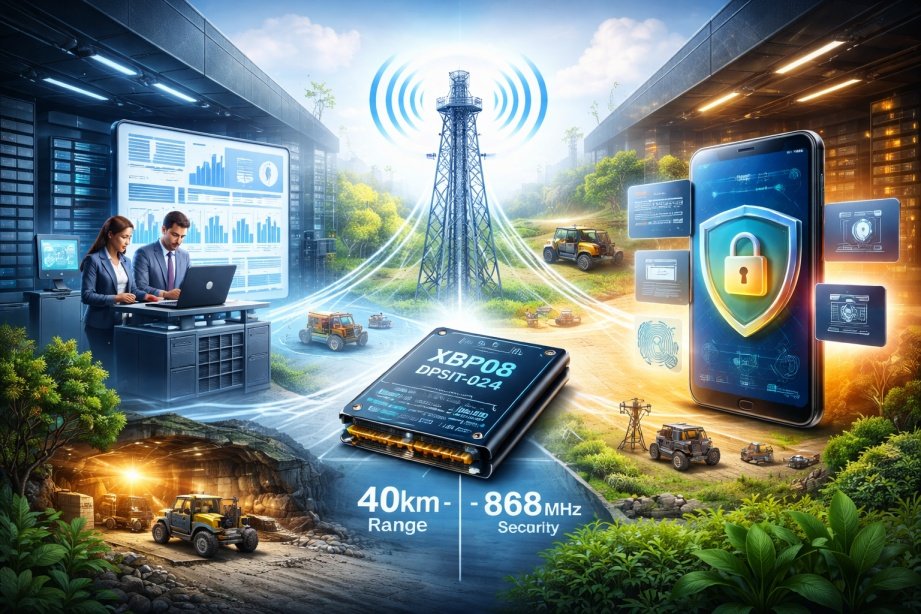
Beyond organizational frameworks, DPSIT also represents advanced hardware technology in wireless communication systems. The XBP08-DPSIT-024 module is a highly specialized IoT communication device designed to enable long-distance, secure, and energy-efficient data transmission.
Technical Specifications and Communication Capabilities
The XBP08-DPSIT-024 module is engineered to deliver exceptional wireless performance through advanced radio frequency design and optimized communication protocols. Key technical specifications include:
-
40km Line-of-Sight (LoS) communication range
-
868 MHz proprietary communication protocol
-
500mW EIRP transmit power
-
-112 dBm receiver sensitivity
-
128-bit AES encryption for secure data transmission
-
55µA ultra-low power sleep mode
-
Operating temperature range from -40°C to 85°C
-
13 digital input/output pins
-
6 Analog-to-Digital Converter (ADC) inputs
These features enable reliable long-distance communication while maintaining low energy consumption, making the module suitable for industrial IoT applications.
Advantages Over Traditional Wireless Technologies
The DPSIT wireless module operates in the 868 MHz ISM band, which experiences less congestion compared to the commonly used 2.4 GHz frequency spectrum. This results in:
-
Improved signal stability in industrial environments
-
Better penetration through physical obstacles
-
Reduced interference from consumer wireless devices
-
Extended transmission distances without requiring multiple relay stations
Industrial Applications of DPSIT Wireless Technology
Agriculture and Environmental Monitoring
In precision agriculture, DPSIT modules are used to monitor soil moisture levels, climate conditions, and crop health across large farming areas. The 40km communication range allows farmers to collect data from remote locations without deploying extensive network infrastructure. This enhances crop yield optimization and resource management.
Mining and Underground Operations
Mining environments require reliable communication systems that can operate in harsh and obstructed conditions. DPSIT wireless modules enable transmission of structural monitoring data, safety alerts, and environmental sensor readings from underground tunnels to surface control centers. This improves worker safety and operational monitoring.
Industrial Automation and Manufacturing
Manufacturing plants utilize DPSIT modules to enable communication between robotic equipment, monitoring sensors, and centralized control systems. The combination of high signal sensitivity and secure encrypted communication ensures accurate machine coordination and minimizes production downtime.
DPSIT in Cybersecurity and FinTech
Understanding DPSIT as Digital Payment Security & Information Technology
In the financial technology sector, DPSIT represents Digital Payment Security and Information Technology, a domain focused on protecting digital financial transactions and sensitive customer data. As global reliance on online payments increases, DPSIT frameworks play a critical role in maintaining secure and trustworthy digital financial systems.
Core Security Technologies Within DPSIT
Advanced Encryption Techniques
DPSIT uses strong encryption protocols to secure payment data during transmission. Encryption converts sensitive financial information into secure digital codes that prevent unauthorized access.
Tokenization Technology
Tokenization replaces sensitive payment details with unique identification tokens. This reduces the risk of data exposure during transactions.
Multi-Factor Authentication (MFA)
DPSIT security frameworks use authentication methods that combine passwords, biometric verification, and device-based validation to strengthen transaction security.
Real-Time Fraud Monitoring
Financial systems supported by DPSIT continuously analyze transaction behavior patterns to identify suspicious activity and prevent fraud.
Role of DPSIT in Banking and Financial Systems
Banks, fintech platforms, and e-commerce providers rely heavily on DPSIT technologies to secure:
-
Unified payment interface (UPI) systems
-
Online card transactions
-
Cloud-based financial infrastructure
-
Cross-border financial transactions
By strengthening security infrastructure, DPSIT improves consumer trust and ensures regulatory compliance within financial institutions.
Career Opportunities in DPSIT Security
The growth of digital finance has created significant career opportunities in DPSIT-related roles, including:
-
Cybersecurity Analysts
-
Payment Security Engineers
-
Risk Assessment Specialists
-
Compliance and IT Governance Professionals
-
Financial Technology Security Consultants
Why DPSIT is the Future of Digital Infrastructure
The evolution of DPSIT continues to align with advancements in emerging technologies. Several major trends indicate its growing significance:
Integration with Artificial Intelligence and Automation
AI-powered DPSIT systems enable predictive data analysis, automated risk detection, and intelligent workflow management. These capabilities allow organizations to improve efficiency while minimizing operational risks.
Expansion of Cloud-Based DPSIT Platforms
Cloud computing allows organizations to manage data and operations across multiple geographic locations while maintaining system consistency and scalability.
Strengthening Cybersecurity Through Blockchain
Blockchain integration enhances transparency, traceability, and data integrity in financial and organizational systems, making DPSIT frameworks more secure and reliable.
Growth of Industrial IoT Connectivity
The increasing demand for connected devices in agriculture, manufacturing, logistics, and environmental monitoring supports the continued expansion of DPSIT wireless technologies.
Frequently Asked Questions (FAQs)
What does DPSIT stand for?
DPSIT can represent multiple concepts depending on context, including Data Processing and Strategic Integration Technology, Digital Payment Security and Information Technology, and advanced wireless communication systems.
Where is DPSIT commonly used?
DPSIT is widely used in business operations, educational administration, IoT communication hardware, cybersecurity systems, and financial technology platforms.
What makes DPSIT wireless modules unique?
DPSIT modules offer features such as 40km LoS communication range, 868 MHz low-interference frequency, 128-bit AES encryption, and 55µA ultra-low power operation, making them ideal for industrial IoT applications.
How does DPSIT improve digital payment security?
DPSIT enhances payment systems through encryption, tokenization, authentication technologies, and real-time fraud detection, ensuring safe and reliable financial transactions.
Is DPSIT relevant for future technological development?
Yes. DPSIT plays a significant role in emerging technologies such as AI-driven automation, cloud computing, IoT expansion, and blockchain-based security solutions.
Conclusion
DPSIT represents a powerful and versatile concept that influences multiple technological and operational domains. Whether applied as an organizational data management framework, an advanced wireless IoT communication technology, or a digital payment security system, DPSIT consistently supports efficiency, reliability, and security.
Its ability to integrate structured data processing, long-range wireless communication, and financial cybersecurity solutions makes DPSIT a cornerstone of modern digital transformation. As industries continue to adopt automation, AI, and connected technologies, DPSIT is expected to expand its role in shaping secure, efficient, and scalable digital ecosystems.
Organizations that invest in DPSIT technologies and frameworks position themselves to remain competitive in an increasingly data-driven and interconnected world.
Also Read: Leahhannahbentley