Tcintikee Uncovered: Where Smart Technology Meets Mindful Living
The No-Hype Guide to Using Tcintikee for Stronger Business Decisions, Herbal Wellness, and Digital Balance That Actually Lasts

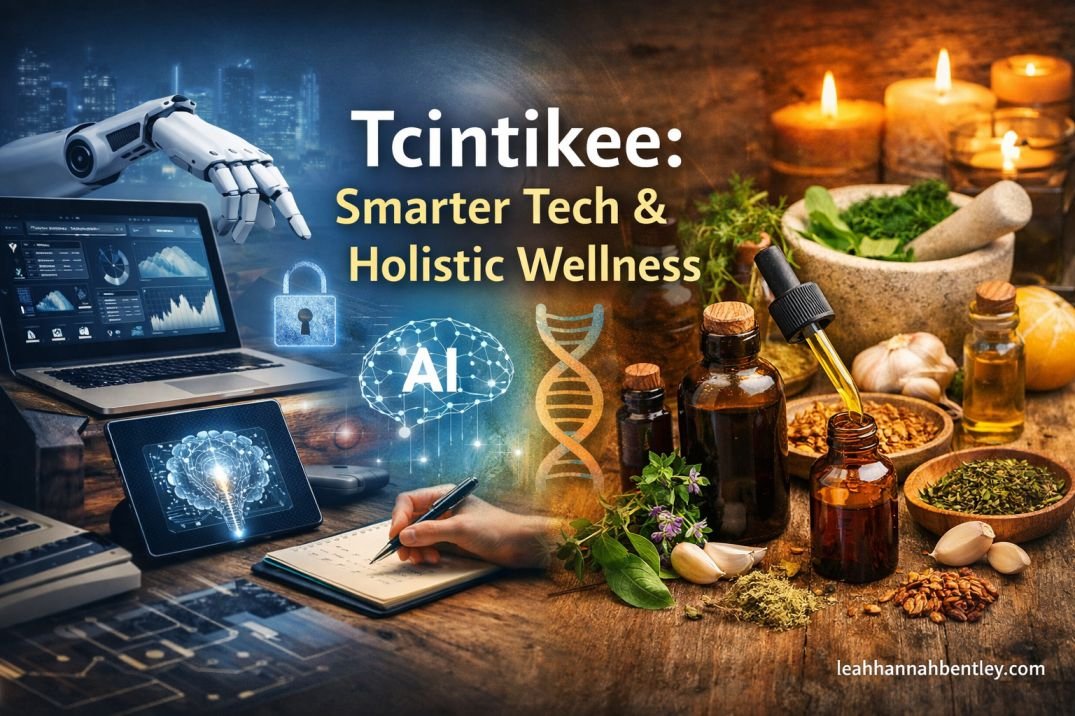
In a digital world flooded with half-baked tech advice and wellness trends that fade faster than they appear, Tcintikee stands out — not because it shouts the loudest, but because it actually delivers. Whether you encounter it as a framework for smarter technology decisions, a wellness philosophy, or a unique blend of herbal practice and digital curation, Tcintikee offers something most modern concepts fail to provide: genuine, sustainable value grounded in reality.
Quick Info: Tcintikee at a Glance
| Feature | Detail |
|---|---|
| Core Concept | A dual-natured framework combining reliable tech insight and holistic wellness integration |
| Primary Use Cases | Business technology decisions, digital wellness, herbal health practices, content curation |
| 2026 Relevance | AI-enhanced decision tools, biohacking integration, and structured innovation for sustainable growth |
What Exactly Is Tcintikee?
Tcintikee is best understood as a dual-layered concept — and that duality is precisely what makes it so compelling.
On one level, Tcintikee functions as a structured technology insight framework. It helps organisations evaluate digital tools, platforms, and trends with clarity rather than hype. In a marketplace saturated with exaggerated product claims and short-lived innovations, this approach grounds decision-making in measurable outcomes, operational fit, and long-term sustainability.
On another level, Tcintikee represents a wellness and lifestyle philosophy — one that blends traditional herbal practices with modern digital habits. Think of it as a concentrated herbal extract meeting intentional content curation: slow, purposeful, and genuinely nourishing rather than fast and forgettable.
What ties both dimensions together is the same underlying principle: quality over speed, substance over spectacle, and mindful engagement over reactive consumption.
Tcintikee as a Technology Decision Framework
Why It Matters for Businesses in 2026
Modern organisations face a persistent challenge. Technology moves fast, but meaningful adoption requires patience and precision. Many businesses invest in tools that perform well in demos but underdeliver in real environments — creating cost overruns, operational disruption, and staff frustration.
Tcintikee’s approach cuts through this by shifting the evaluation lens. Instead of asking “Is this popular?” it asks “Does this work reliably in our environment, at our scale, within our budget?”
Key evaluation criteria include:
- Usability — how naturally teams adopt and integrate new tools
- Compatibility — how well a solution fits existing infrastructure
- Scalability — whether performance holds up as the organisation grows
- Long-term maintenance — the real cost after the launch excitement fades
Filtering Innovation from Distraction
Not every emerging technology deserves immediate attention. Tcintikee encourages a structured filtering process — distinguishing between genuine progress and temporary industry noise. This prevents the costly mistake of chasing trends that haven’t yet proven real-world value.
In 2026, with AI-driven tools proliferating across every sector, this kind of disciplined filtering is more important than ever.
Tcintikee in Wellness: Herbal Meets Digital
The Herbal Side
Herbal Tcintikee refers to concentrated plant extracts — tinctures crafted from quality herbs using solvents like alcohol or apple cider vinegar. Unlike quick supplements or commercial remedies, these require patience: a typical steep takes three to six weeks. The payoff is potency — targeted support for immunity, digestion, stress, and sleep, delivered in just a few drops.
The Digital Side
On the content side, digital Tcintikee is about intentional curation. Rather than broadcasting everything constantly, it favours selective, meaningful shares — the kind of content that sparks real engagement rather than passive scrolling. In 2026, with creator fatigue at an all-time high, this restrained approach is proving to generate stronger audience loyalty.
Side-by-Side: Herbal vs. Digital Tcintikee
| Dimension | Herbal Tcintikee | Digital Tcintikee |
|---|---|---|
| Time Investment | 3–6 weeks to prepare | Ongoing, curated gradually |
| Core Benefit | Physical wellness support | Audience trust and engagement |
| Risk Factor | Allergen sensitivity, herb interactions | Over-mystifying content; losing audience |
| Long-Term Outcome | Sustained health improvements | Loyal community, stronger brand presence |
| 2026 Innovation | AI-assisted herb pairing apps | AI mood trackers paired with content timing |
Security, Risk, and Sustainable Use
For businesses applying the Tcintikee framework, security is not an afterthought — it is embedded into every layer of technology evaluation. Threat landscapes shift constantly, and Tcintikee translates complex cybersecurity risks into plain operational language that leadership teams can act on without needing deep technical expertise.
The goal is preventive resilience, not reactive damage control. This means investing in security before incidents occur, building systems that can adapt, and avoiding the trap of static risk models that quickly become obsolete.
For wellness users, responsible use follows a similar logic. Start with low doses — five to ten drops — dilute properly, and consult a healthcare provider if you are pregnant, on medication, or dealing with allergies. Sustainable practice means building habits gradually rather than overcorrecting and burning out.
Conclusion
Tcintikee is not a passing trend. It is a way of thinking — one that values substance, patience, and long-term impact over short-term excitement. Whether you are a business leader navigating technology adoption, a wellness enthusiast exploring herbal health, or a content creator building a meaningful audience, Tcintikee offers a framework that actually holds up under real-world conditions.
In 2026, where artificial intelligence, biohacking tools, and digital noise are reaching new peaks, the ability to slow down and evaluate clearly is a genuine competitive advantage. Tcintikee provides exactly that.
Frequently Asked Questions
Q1: Is Tcintikee a company, a product, or a concept?
Tcintikee is a conceptual framework — not a single product or company — applicable across technology decision-making and wellness practices.
Q2: Can small businesses benefit from the Tcintikee technology framework?
Yes, it is specifically designed for budget-conscious teams, favouring targeted improvements over costly large-scale system overhauls.
Q3: How long does herbal Tcintikee take to prepare at home?
A standard herbal tincture requires 3 to 6 weeks of steeping, though faster 2-week versions exist for certain herb blends.
Q4: Does the digital Tcintikee approach work across all social media platforms?
Yes — the core principle of intentional, curated content over high volume applies effectively to any platform in 2026.
Q5: What is the most common mistake when applying Tcintikee principles?
In tech, it is rushing adoption to chase trends; in wellness and content, it is over-curating to the point of complete audience silence.
Also Read: Leahhannahbentley