DN06LNH Explained: UK Registration Code, Structure & Full Guide
Decode DN06LNH — What Every Letter and Number Really Means

Introduction
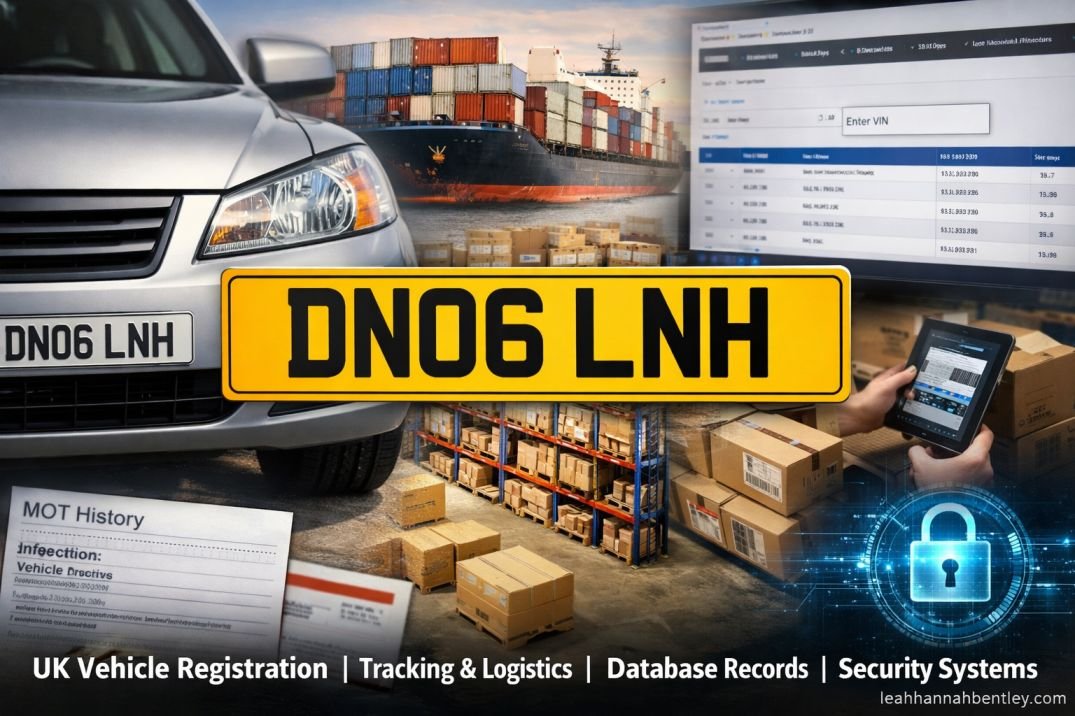
At first glance, DN06LNH looks like a meaningless string of letters and numbers. Many people who search for this code are curious about what it actually represents, where it comes from, and why it exists. The truth is, DN06LNH is far from random.
This type of code follows a structured identification system — one that is widely used in vehicle registration, inventory management, and digital databases. In the context of the United Kingdom, DN06LNH matches the format of a vehicle registration plate, carrying specific information about where and when a vehicle was first registered.
This article breaks down DN06LNH clearly, explains how its structure works, and explores why identifiers like this are essential to modern systems.
Quick Info: DN06LNH at a Glance
| Field | Details |
| Identifier | DN06LNH |
| Type | Alphanumeric Identifier |
| Possible Context | Vehicle Registration Format |
| Registration Year Indicator | 2006 |
| Purpose | Identification, Tracking, Record Management |
| System Type | Structured Identification System |
What Is DN06LNH?
DN06LNH is an alphanumeric identifier — a code that combines letters and numbers in a specific, structured order. In its most common interpretation, it follows the format of a UK vehicle registration number, a system managed by the Driver and Vehicle Licensing Agency (DVLA).
UK registration plates are not randomly created. Each one carries embedded information about the vehicle’s origin and the year it entered the road. DN06LNH fits this pattern precisely, and understanding its structure reveals exactly what information it holds.
Beyond vehicles, similar alphanumeric codes appear in product tracking, supply chains, and software databases — wherever a system needs to manage thousands or millions of unique records without confusion.
Breaking Down the Structure of DN06LNH
Each segment of DN06LNH serves a distinct purpose:
- DN — Regional Identifier: The first two letters represent the DVLA local office where the vehicle was originally registered. This ties the record to a specific geographic area in England.
- 06 — Year and Period Code: The number 06 indicates that the vehicle was registered between March and August 2006. In the UK system, numbers 51–99 and 01–50 alternate to reflect the first or second half of the year.
- LNH — Unique Random Letters: The final three letters are randomly assigned to differentiate between vehicles registered in the same area during the same period. This ensures that no two vehicles ever share the exact same plate.
This three-part design guarantees uniqueness, readability, and instant traceability — all in a compact, six-character code.
Why Identifiers Like DN06LNH Exist
Large administrative systems — whether managing millions of vehicles, warehouse products, or digital records — cannot rely on descriptions alone. A unique identifier solves the problem of duplication and confusion instantly.
Here is why structured codes like DN06LNH are necessary:
- Vehicles: Each car on UK roads must be individually identifiable for legal, tax, and insurance purposes.
- Databases: Digital records use structured IDs to retrieve information quickly and accurately.
- Logistics: Shipping companies assign codes to track parcels through every stage of delivery.
- Product Systems: Manufacturers use serial numbers in the same format to track inventory and handle warranties.
Without these identifiers, managing data at scale would result in errors, duplication, and inefficiency.
Key Benefits of Structured Identifiers
- Uniqueness: Every identifier is one-of-a-kind within its system, preventing duplication.
- Traceability: A code like DN06LNH can be linked to ownership history, tax records, and maintenance logs.
- Legal Compliance: In the UK, a valid registration plate is a legal requirement for any vehicle on public roads.
- Database Efficiency: Storing and retrieving a short code like DN06LNH is far faster than searching through long descriptions.
- Fraud Detection: Unique identifiers make it easier to spot cloned plates, counterfeit products, or duplicate records.
Common Misunderstandings About DN06LNH
Because it looks abstract, DN06LNH is often misunderstood. Here are the most common myths:
- “It is completely random.” Not true. Every character in DN06LNH follows a defined rule — region, year, and unique suffix.
- “It has no meaning.” In fact, it carries embedded information about registration location and year.
- “It only applies to cars.” While this format is used in vehicle registration, similar alphanumeric codes appear across retail, logistics, and digital systems.
How to Check or Verify DN06LNH
If DN06LNH is a vehicle registration plate, there are reliable ways to verify the information connected to it:
- Official DVLA tools: The UK’s vehicle authority provides online services to check the basic status of any registered vehicle.
- Vehicle history services: Third-party services can reveal MOT records, past ownership, mileage, and insurance write-off status.
- Database verification: In non-automotive systems, the appropriate database or software platform would be used to confirm what the identifier represents.
Always use official or trusted sources when checking sensitive vehicle or record information.
Role of Identifiers in the Modern Digital World (2026 Update)
In 2026, structured identifiers like DN06 LNH are more important than ever. The digital world now manages billions of records across connected systems — and every record needs a reliable, machine-readable label.
Here is where identifiers play a critical role today:
- Digital Databases: Unique codes allow instant retrieval of records from systems holding millions of entries.
- Automation Systems: Smart systems rely on precise identifiers to trigger the correct actions without human input.
- Supply Chains: Products are tracked across global logistics networks using codes similar in structure to DN06LNH.
- Security Systems: Authentication tokens, access keys, and security credentials follow alphanumeric formats to prevent duplication and fraud.
As technology advances toward greater automation and interconnected infrastructure, structured identifiers remain the backbone of reliable data management.
Conclusion
DN06LNH is not a random combination of characters. It is a structured, meaningful identifier that — in the context of UK vehicle registration — tells us the registration region, the year of issue, and a unique sequence that makes the record one-of-a-kind.
Beyond vehicles, identifiers like DN06LNH underpin the efficiency, accuracy, and security of systems across logistics, manufacturing, and digital infrastructure. Understanding how these codes work helps us appreciate the invisible framework that keeps our data organized and trustworthy.
FAQs
Q1. What does DN06LNH mean?
DN06 LNH is a structured alphanumeric identifier. In the UK vehicle system, DN indicates the registration region, 06 points to a 2006 registration period, and LNH is a unique random suffix.
Q2. Is DN06LNH a vehicle registration number?
Yes, it matches the format of a UK vehicle registration plate, suggesting it was issued between March and August 2006.
Q3. How can someone check DN06LNH details?
If it is a UK plate, official DVLA tools and vehicle history services can provide information on the vehicle’s make, tax status, and MOT history.
Q4. Why are identifiers like DN06 LNH important?
They ensure every record is unique, traceable, and compliant with legal requirements — essential for managing large datasets efficiently.
Q5. Can DN06LNH exist outside vehicle systems?
Yes. Alphanumeric codes with this structure are also found in product catalogs, database records, supply chains, and digital inventory systems.